<-- this is shared/teaser/slider-teaser.html.erb -->
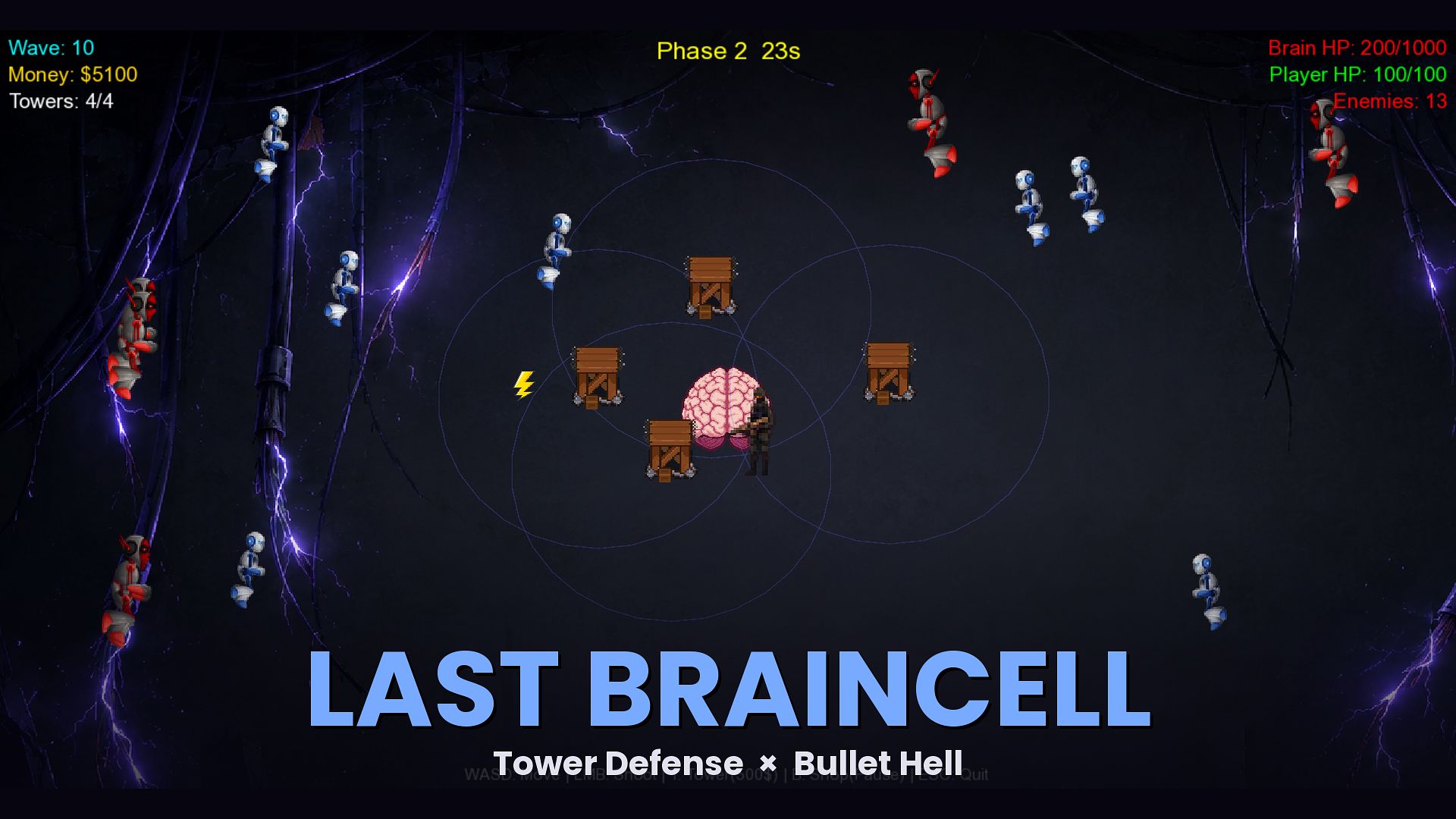
Gamplay
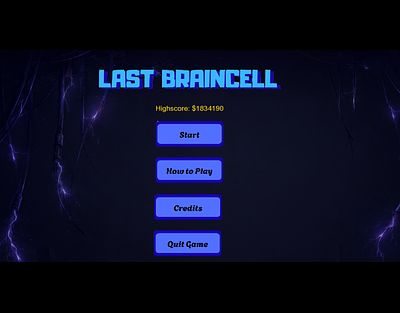
menu
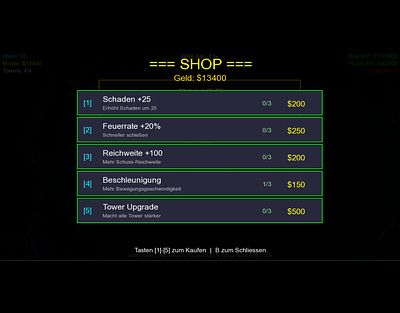
shop
Phase 2
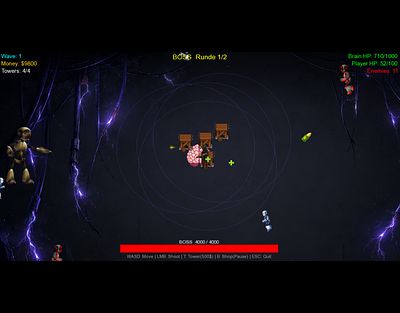
Boss
Phase 3
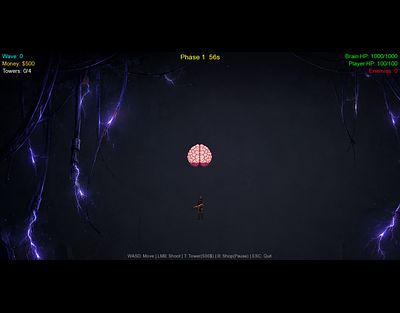
Phase 1
Portfolio Text
Last Braincell
MultiMediaTechnology / FH Salzburg — Multimediaprojekt 1 (MMP1) — Author: Alhusaini Mohammed
Last Braincell
Last Braincell is a 2D action game that mixes two classic genres:
tower defense and bullet hell. The premise is simple but tense — somewhere in a dark, ruined city, the last functioning human brain is all that remains, and it is your job to keep it alive. Waves of robots pour in from every edge of the
screen, and you are the only thing standing between them and the brain.
You control a lone fighter who moves with the WASD keys and aims with the mouse.
Clicking fires bullets toward the cursor, so positioning and aim both matter:
you constantly reposition to cover the brain from several directions at once.
Money earned from destroying enemies can be spent in a shop between waves, where you upgrade your damage, fire rate, range and movement speed, or invest in automated defense towers. Towers start weak and can be upgraded so they grow into a serious part of your defense, letting you cover angles you cannot reach on your own.
The game is structured in escalating phases. The first phase eases you in with fast, lightly armored robots. After a short break — your chance to shop — the second phase mixes in tougher and exploding enemy types. The finale is a
two-round boss fight: a heavily armored boss takes position on one side of the arena while a lot of smaller robots and tanks swarm in. Defeat the boss and it reappears on the opposite side for a second, equally demanding round. Survive both, and you win. Let the brain fall, and it is game over.
Visually, the game leans into a moody, pixel-art night setting: a silhouetted
city skyline under a starry sky, animated sprites for the player, robots and the
boss, and color-coded projectiles. A full soundtrack and sound effects
for shooting, collecting power-ups, the boss teleporting between rounds, and the win and lose states round out the atmosphere.
Under the hood, Last Braincell is written in C# using the SFML
multimedia library, built on top of the engine framework introduced in the
course. The code is organized around a central game loop that manages distinct states — menu, playing, shop and game over — and delegates work to focused components: a phase manager that drives the wave and boss progression, an asset manager for textures and audio, and separate classes for the player, enemies, boss, towers and projectiles. A fixed logical resolution keeps the interface correctly centered even in fullscreen.
The project was both a design and a programming challenge: balancing difficulty so the game feels fair but tense, building a boss encounter that reads clearly, and polishing the many small details aiming, readable menus, audio levels, that separate a prototype from a finished game. The result is a compact, replayable defense game with a clear goal: protect the last braincell, for as long as you possibly can.